

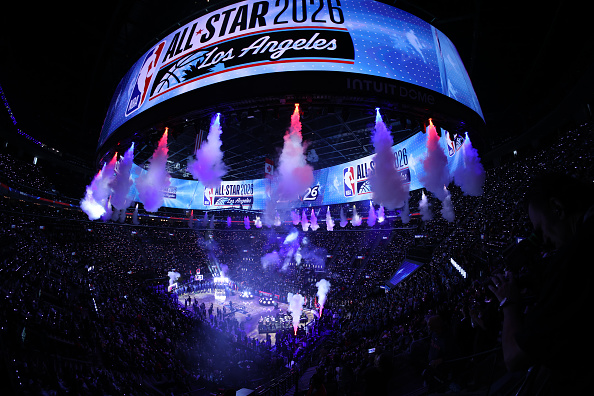
The NBA All-Star Game 2026 marked the 75th edition of the league’s midseason classic, held February 15 at the Intuit Dome in Inglewood, California. What unfolded was more than an exhibition. It was a competitive reset and a clear reminder that the NBA operates as a multibillion-dollar global enterprise.
USA Stars defeated USA Stripes 47–21 in the championship round of a newly introduced three-team, round-robin format. Anthony Edwards earned MVP honors, while Victor Wembanyama and Kawhi Leonard delivered performances that reinforced the league’s star power. The format produced urgency. The business implications were just as significant.
The NBA now generates more than $12.5 billion in annual revenue. Average franchise valuations approach $5.4 billion. No team is valued below $3 billion, and several exceed $7 billion. The league’s financial structure extends well beyond ticket sales and television broadcasts. All-Star Weekend sits at the center of that architecture.
NBA All-Star 2026: A New Format, Real Stakes
USA Stars: 2026 NBA All-Star Champions | Post Credit: @nba and @nbaallstarvia Instagram
The 2026 edition replaced the traditional East vs. West matchup with a three-team tournament: USA Stars, USA Stripes, and Team World. Four 12-minute games determined the champion.
Results:
- USA Stars 37, World 35
- USA Stripes 42, USA Stars 40
- USA Stripes 48, World 45 (World eliminated)
- Championship: USA Stars 47, USA Stripes 21
Anthony Edwards led decisively in the final. Tyrese Maxey provided additional scoring punch. Wembanyama’s two-game stretch included 33 points and defensive intensity that shifted tone across the floor. Kawhi Leonard scored 31 points in 12 minutes in an earlier round, shooting 11-for-13.
The compressed structure forced engagement. Players competed with visible intent. For a league that markets elite talent globally, the format strengthened the product.
The Business Architecture of the NBA All-Star Weekend
The NBA is the second-largest U.S. sports competition by domestic media rights value, behind the NFL, earning roughly $2.7 billion per season from ESPN and Warner Bros. Discovery under its previous agreement. That figure is now expanding dramatically.
In July 2024, the league finalized a new 11-year, $76 billion domestic media rights deal with ABC/ESPN, NBC/Peacock, and Amazon Prime Video. The agreement averages approximately $6.9 billion annually. It nearly triples prior domestic media revenue and substantially increases each franchise’s annual distribution.
Internationally, the NBA generates approximately $715 million annually in media rights revenue, accounting for about 21 percent of total media rights value. Basketball ranks among the most popular global sports, behind only soccer, the Olympics, and tennis. The league outperforms other U.S. competitions internationally, including the NFL and MLB.
Key revenue drivers include:
- Long-term media rights agreements
- Global sponsorship partnerships, including a Nike deal valued at more than $1 billion
- Star-driven marketing strategies
- Digital platforms such as NBA League Pass
- International merchandising
The NBA typically attracts a younger audience than other major leagues. Among U.S. fans aged 18–34, it ranks as the most-followed sports competition. That demographic strength enhances media rights leverage and brand value.
With 30 teams and year-round programming, the NBA operates as a continuous commercial engine. All-Star Weekend is one of its highest-visibility moments.
Luxury Travel During NBA All-Star 2026
Major sporting events generate substantial local economic impact. The NBA contributes hundreds of millions of dollars annually to host cities through arena revenue, tourism, hospitality, and associated events.
During the NBA All-Star Game 2026, private aviation traffic increased across Southern California. Five-star hotels secured premium rates months in advance. Corporate hospitality suites functioned as executive meeting spaces.
Typical high-end engagement included:
- Courtside premium seating
- Branded lounge access
- Private receptions hosted by corporate partners
- Exclusive sponsor events
The NBA’s economic model extends beyond basketball. Arena ownership, concert revenue, and non-NBA events significantly boost franchise valuations. In 2024 alone, sponsorship revenue rose approximately 15 percent league-wide. Concert operations at NBA-controlled venues generated meaningful incremental income.
For those who follow global sporting events as part of a broader luxury travel portfolio, experiences like NBA All-Star Weekend mirror the elevated cultural access explored throughout Ocean Blue World’s coverage of global luxury destinations and elite events.
Courtside as Cultural Capital
The NBA’s global positioning is reinforced by its star-driven structure. Players such as Wembanyama, Nikola Jokić, and Luka Dončić represent international pipelines that continue to expand the league’s reach.
According to global audience surveys, the NBA ranks among the top three favorite sports competitions in multiple international markets. Individual franchises, particularly the Los Angeles Lakers, maintain fan bases that rival leading European football clubs.
The league’s digital-first approach amplifies this effect. Younger audiences subscribe to NBA League Pass at higher rates than the average sports fan. Social engagement fuels merchandise demand and reinforces player-driven branding.
All-Star Weekend serves as both cultural indicator and commercial amplifier. It showcases player personalities while reinforcing sponsor alignment and international broadcast value.
The Billion-Dollar Weekend
All Star MVP Anthony Edwards | Post Credit: @nba via Instagram
The NBA All-Star Game 2026 demonstrated how the league’s showcase event integrates into a broader multibillion-dollar ecosystem. Collective franchise value across the league is estimated between $130 billion and $150 billion. Recent team sales illustrate escalation: the Boston Celtics sold for $6.1 billion, and reports indicate the Los Angeles Lakers are valued near $10 billion.
The league’s financial growth is supported by:
- Expanding media rights distributions
- Controlled salary cap structures
- Global sponsorship portfolios
- International expansion initiatives
- Potential European league development in partnership with FIBA
The NBA continues to explore international expansion and long-term structural growth, including the possibility of a European competition. With domestic media rights secured through 2036, the foundation for sustained valuation growth is in place.
Against that backdrop, the NBA All-Star Game 2026 was not simply a competitive showcase. It was a demonstration of structural strength. The format delivered intensity. The business model delivered scale.
Together, they reinforced a central reality: the NBA is no longer just a sports league. It is one of the most valuable global entertainment properties in the world, and All-Star Weekend remains one of its most concentrated displays of competitive and commercial power.